Bay Area
Bay Area independent schools that accept the ISEE: entry grades, the level each entry grade requires and each school's stated test policy, with a check date per record.
Read →No admission test; applications close January 8, 2027.
Plan the application to Sonoma Academy →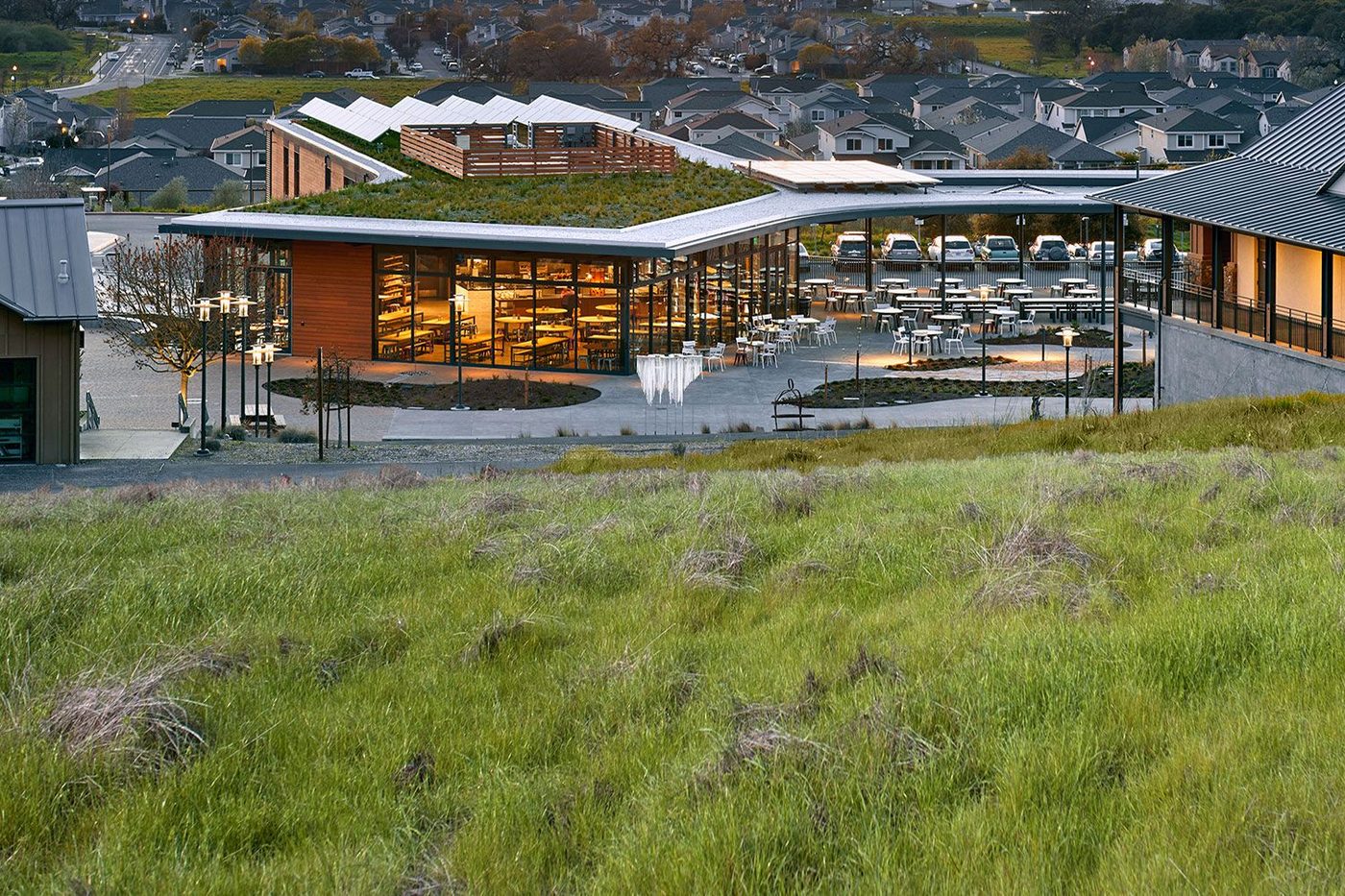
Sonoma Academy in Santa Rosa, California, is a coeducational day high school for grades 9–12 with about 335 students. The main entry point is grade 9, and transfer applications are considered for upper grades. The school neither requires nor accepts ISEE, SSAT, or other admission test scores. Early Decision applications are due November 1, 2026, with results on January 15, 2027, and Regular Decision applications are due January 8, 2027, with results on March 12. Tuition including lunch for 2026–27 is $60,700.
| Entry grade | Test | Requirement | Notes |
|---|---|---|---|
| Grade 9 | No ISEE / SSAT | Not accepted | Main entry point. No standardized admission test scores are required or accepted. |
| Upper grades (transfer) | No ISEE / SSAT | Not accepted | Transfer students may apply by the same deadlines. The grades open to transfers are worth confirming with the admission office. |
Applicants to Sonoma Academy do not need to prepare for the ISEE. The review centers on the school transcript, three recommendations, student and parent essays, and an interview of about 45 minutes. Use preparation time to keep grade 7 and 8 math and English work steady and to begin essay writing early. Schools on the same list that require the ISEE set their own test schedules, and students whose first language is not English also need to plan for TOEFL or Duolingo.
These are the dates for fall 2027 entry. The Visit Days on October 7 and October 28 have already taken place. Applications submitted after the deadline, or with missing materials, are reviewed as space allows after both rounds of results are released.
The Early Decision deadline of November 1 is close, so families that cannot finish the essays and three recommendations in time can prepare for the January 8 Regular Decision deadline instead. Visit Day spaces are limited, so book a November date soon if the student would like to sit in on classes. Families seeking aid file the aid application on the same day as the admission application, so prepare both together.
| Item | Submitted by | Due |
|---|---|---|
| Online application, including a student essay and a parent essay | Parent / student | Early Decision November 1, 2026; Regular Decision January 8, 2027 |
| Transcript | School | With the application |
| Three recommendations: current math teacher, current English teacher, and school counselor or principal (sent as electronic forms from the online application) | Teacher | With the application |
| Optional recommendation from a person of the student's choosing | Teacher | With the application |
| Financial aid application in Clarity (if aid is needed) | Parent | Same date as the chosen application round |
| Davis Scholarship application (eligible applicants only, completed inside the online application) | Parent / student | With the application |
Recommendations come from the current math and English teachers, so speak with them in October and allow at least three weeks. Both a student essay and a parent essay are required, and the prompts appear only inside the MySA system, so request an account early and open the application to read them. The interview is scheduled only after all materials are in, so the sooner materials arrive, the sooner the interview can be booked.
Budget from $60,700, then add a laptop, AP exam fees, and bus fees for families living in Napa or Sonoma. The school lists aid examples by income band, and households with income below $550,000 may find it worthwhile to apply. Merit scholarships need no separate application but are considered only for students who apply on time, which is one more reason to meet the deadline.
The school can issue an I-20 but has no dormitory, so international students live with host families. This suits families comfortable with a homestay arrangement or with relatives in the Sonoma, Napa, or Marin area. Parts of the international admissions page appear to be older, so confirm the current English score expectation and interview format with the admission office before applying. Students who speak Chinese at home can look at where Mandarin placement begins.
Of the 43 schools in the Bay Area on this site, 7 require or accept the ISEE, 0 use another external test, 33 use only their own assessment or no test, and 3 do not state a test on their admissions pages. Sonoma Academy is in the group “Uses only its own assessment or no test”. This groups schools by published testing policy only; it says nothing about which school is better.
What follows restates what the school publishes, without comment; the school’s current pages govern.
The school follows a college-preparatory curriculum. In grades 9–11, English and history are combined into the interdisciplinary Humanities I–III, which reads literature and studies history around core questions. Since 2024–25 the school has replaced AP and Honors with its own Advanced Studies (AS) courses, generally taken from grade 11, and students may still sit for some AP exams. The schedule uses long blocks across four rotating periods, grades are on a 4.0 scale, grade 9 grades are not counted in the cumulative GPA, and the school does not rank students.
Students are placed in advisory groups of about 10 across grades, staying with the same advisor for four years and meeting weekly. The whole school gathers once a week for a student-led Community Meeting, and every grade 12 student gives a talk there as a graduation requirement. The school has a student-shaped Honor Code, and a licensed counselor is on campus four days a week.
The school competes under CIF North Coast Section rules with varsity and JV levels, and about 55% of students play at least one sport. Playing a sport every season is not required. Grades 9 and 10 take physical education, and students on school teams are exempt.
Students complete 2 arts credits, chosen from visual art, music, theater, or Visual Thinking & Fabrication, and about 60% take part in theater, music, or dance. Theater presents two main stage productions a year plus student one-act plays. In 2026–27, the fall musical is Hadestown (November 12–15, 2026) and the spring play is Twelfth Night.
The 34-acre campus is at 2500 Farmers Lane in Santa Rosa, at the foot of Taylor Mountain beside protected open space. The newest academic building, the Guild & Commons, houses a makerspace and a teaching kitchen, and the school describes the campus as net-zero energy. Students come from more than 30 towns and over 80 middle schools across Sonoma, Marin, and Napa counties.
The school has two college counselors. Students take a required college counseling course in spring of grade 11 and fall of grade 12, with about 50 hours of classroom guidance and up to 20 hours of one-on-one meetings. Representatives from 80–90 colleges visit campus each year.
Selected alphabetically from the school's list of 114 colleges attended by the classes of 2021–2025 · the school’s document
| Item | As published | Class |
|---|---|---|
| Graduate destinations | 97% enroll in four-year colleges; 48% stay in California source | Last five classes |
| Weighted GPA | Median 4.12, highest 4.38 source | Class of 2027 |
| College merit scholarships | 53% of graduates received one, averaging $19,356 source | Class of 2023 |
Listed exactly as the school publishes them; not a comparison between schools and not an admission requirement.
No. The school neither requires nor accepts ISEE, SSAT, or other standardized admission test scores, so there is no test window or score reporting. Applicants receive a holistic review with no minimum standard, based on the transcript, three recommendations, student and parent essays, and an interview. Applicants whose first language is not English submit TOEFL, Duolingo, or comparable English scores.
The materials are the same and only the dates differ. Early Decision applications are due November 1, 2026, with admission and aid results on January 15, 2027. Regular Decision applications are due January 8, 2027, with results on March 12. The Clarity aid application is due the same day as the chosen round. Families should ask the admission office whether Early Decision is binding.
After a complete application is submitted, the admission office schedules an interview with the student and parents, led by a member of the admission team and usually about 45 minutes. Because interviews are scheduled only once all materials arrive, earlier submission means an earlier interview. International applicants who cannot join a virtual visit can arrange a Skype or phone interview after the school receives the application.
Yes. After admission, parents return the signed enrollment agreement, pay the tuition deposit, and show first-year financial ability, and the school issues an I-20. There is no on-campus housing, so international students live with host families introduced through partner agencies. TOEFL, Duolingo, or comparable English scores are accepted, with a TOEFL iBT score of 80 expected and exceptions possible.
For 2026–27, comprehensive tuition is $60,700, including $2,200 for lunch, textbooks, field trips, and one international trip. About 50% of families receive aid, averaging $27,000 a year, applied for through Clarity. Students who apply on time are automatically considered for merit scholarships of $1,000–$15,000 a year, with no separate application.
Yes. Transfer students apply by the same deadlines as grade 9 applicants and also submit no test scores. Aid for transfer students is limited, with priority given to enrolled students who already receive aid. Which grades are open and how many spaces exist this year should be confirmed with the admission office. Applications after the deadline are reviewed as space allows once both rounds of results are out.
Data checked 2026-10-03. Where the school’s own pages disagree, this page follows the admissions page. This is not an official school page; confirm every requirement on the school’s admissions page for the current year.
An advisor works from this school’s stated requirements and deadlines to give a written plan: level, season and order of preparation.
Share the grade the student is applying to and an email address. An ISEE advisor replies within one business day with a written recommendation: which level to take, how to schedule the seasons and which section to work on first. The consultation is free and involves no admission promises.
You are looking at the application to ; the advisor will work from that school’s stated requirements.
Details such as target schools and test timing can be added after you submit, or discussed when the advisor contacts you.