Los Angeles
Greater Los Angeles independent schools that accept the ISEE: entry grades, the level each entry grade requires and each school’s stated test policy, dated per record.
Read →School’s own assessment; no external test is required; applications close December 11, 2026.
Plan the application to Mirman School →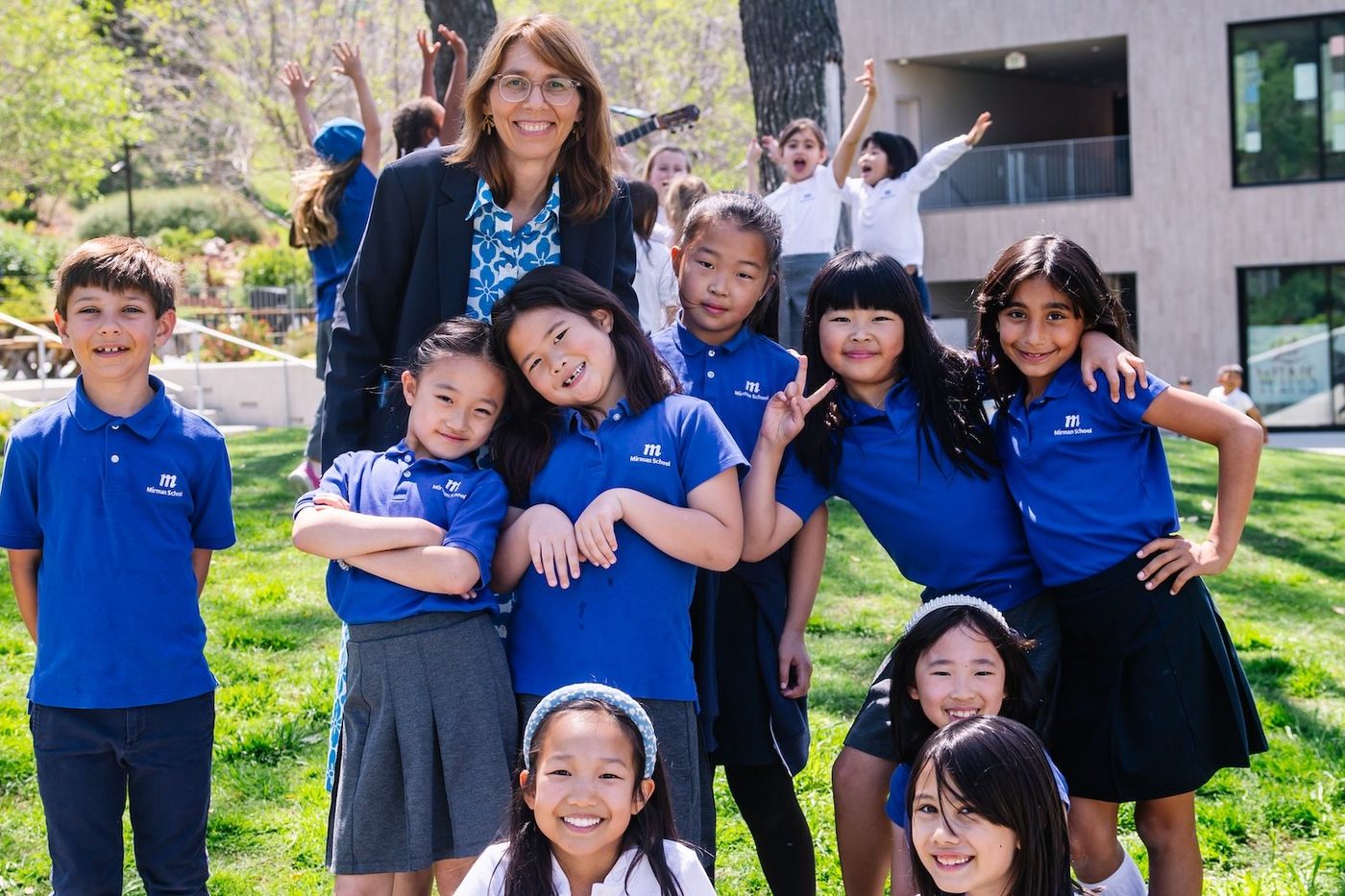
Mirman School is a coeducational day school for grades K–8 in Los Angeles, founded in 1962 for highly gifted children identified through IQ testing. New students enter mainly in kindergarten, and grades 1–7 are open only when a space becomes available. The school does not use the ISEE. Applicants submit a WPPSI-IV or WISC-V report from an approved psychologist by December 4, 2026, and the application is due December 11, 2026. Decisions are emailed on March 12, 2027, and 2026–27 tuition is $46,875–$51,800.
| Entry grade | Test | Requirement | Notes |
|---|---|---|---|
| Kindergarten | WPPSI-IV (IQ test) | Required | Main entry point. The child must be 5 by September 1 of the entry year. After the application, kindergarten applicants attend a Saturday group playdate on campus. |
| Grades 1–7 | WISC-V (age 6 and older) or WPPSI-IV (up to age 7 years 7 months) | Required | Open only when a student leaves and a space becomes available, which is uncommon. Whether a space exists is usually known in February. |
Applicants to Mirman do not need to prepare for the ISEE. The key step is booking an approved psychologist early enough for results to reach the school by December 4, because the application link is sent only after the results arrive. A retest is not possible for a year, so choose a time when the child is rested and settled. The school ends at grade 8, so ISEE planning belongs to the later high school applications.
These are the dates for fall 2027 entry. The October 7 (grades 1–7) and October 15 (kindergarten) parent information evenings and the October 25 open house have already passed; campus tours can be booked online at any time.
The timeline runs backward from the IQ test. Results arrive by December 4, the application link follows, and the application is due December 11, which leaves about one week. Aim to finish testing by mid-November, and give the current school the records release form and recommendation requests before the winter break.
| Item | Submitted by | Due |
|---|---|---|
| IQ test report (WPPSI-IV or WISC-V) from an approved psychologist, sent directly to the school | Testing psychologist | December 4, 2026 |
| Online application (link sent after the school receives the test results) | Parent | December 11, 2026 |
| Application fee of $180 | Parent | With the application |
| Kindergarten Recommendation from the director, principal, or lead teacher of the current school, completed in the application portal | School | January 8, 2027 |
| Grades 1–7: one Administrator Recommendation from the current school | School | January 8, 2027 |
| Grades 1–7: one recommendation from the current classroom teacher, completed after the first grading period or parent conference | Teacher | January 8, 2027 |
| Student records: the parent gives the Consent for Release of Student Records form to the current school, which sends grades or reports for the current and previous year | Parent / school | January 8, 2027 |
| Flexible Tuition application in Clarity with tax documents (aid applicants only) | Parent | January 8, 2027 |
The application has no student essay or writing sample; it rests on the IQ report, recommendations, and school records. Families applying to grades 1–7 should be ready for the possibility of no interview invitation or a place in the wait pool, and should apply to other schools as well. Kindergarten parents should book the interview early rather than waiting until late January.
Tuition already includes after-school care, a laptop, and books, but the first year adds the $2,500 new student fee, plus bus service, lunch, and uniforms. Because the average income of aid recipients is about $170,000, families with moderate to upper-middle incomes may also qualify. File the Flexible Tuition application by January 8 alongside the other materials; the result arrives on the same day as the admission decision.
Mirman suits families already living in Los Angeles who can manage daily drop-off or the school bus. The IQ test is given in English, so for a child who speaks mainly another language at home it is worth waiting until English conversation is comfortable and telling the psychologist about the language background in advance. The Chinese track, available from grade 1, can help maintain the home language.
Of the 39 schools in Los Angeles on this site, 18 require or accept the ISEE, 2 use another external test, and 19 use only their own assessment or no test. Mirman School is in the group “Uses only its own assessment or no test”. This groups schools by published testing policy only; it says nothing about which school is better.
What follows restates what the school publishes, without comment; the school’s current pages govern.
The curriculum combines acceleration with added depth and complexity. Students stay with same-age peers, and teachers work with small groups at different paces within the classroom. Lower School (grades K–4) builds one interdisciplinary theme project each year and uses the Teachers College Reading and Writing Workshop. In Upper School (grades 5–8), math is grouped by readiness, and prepared students can reach Precalculus and Calculus before graduating.
The school follows a seven-day A–G rotation, with a 9 a.m. start on Wednesdays and 163 instructional days in 2026–27. Upper School students meet in grade-level advisory groups, and Lower School students meet by class. Service learning runs from kindergarten to grade 8, moving from school service to community and global issues, with no required hours. Students wear uniforms every day.
Interscholastic play begins in grade 4 and is open to all students on a voluntary basis. In grades 6–8, students can train with a team during the physical education period or take a regular PE class, and games are held after school. Team members must keep up their academic and behavior standing and sign a sports commitment form each season. The school competes in the San Fernando Valley Private School League.
Art, music, and theater are part of the regular program at every grade. Upper School visual arts move from drawing to painting to three-dimensional design (clay, woodworking, welding), and grade 8 adds photography and graphic design. All grade 4 students sing in the Mustang Chorus, every grade 7 student takes part in a full theater production, and grade 8 stages a full musical.
The school has a single campus on Mulholland Drive in Los Angeles (16180 Mulholland Drive, 90049). Facilities include an athletic field, a gym, two outdoor courts, an auditorium, a library, and a new learning center. The school describes itself as not a neighborhood school: families live across Los Angeles, and a contractor runs 5 bus routes. The admission office can connect families in the same area for carpooling.
The school ends at grade 8, so graduates apply to other high schools, with guidance from the Upper School leadership and the head of school. Destinations are mostly day schools in Los Angeles, and some students attend boarding schools in other states.
Selected, in alphabetical order, from the 26 high schools listed in the admission FAQ as recent destinations · the school’s document
No. Mirman does not use the ISEE or the SSAT. Every applicant takes a one-on-one IQ test with a psychologist on the school's approved list: the WPPSI-IV for kindergarten, or the WISC-V (age 6 and older) or WPPSI-IV (up to age 7 years 7 months) for grades 1–7. The test is given in English, and the psychologist sends results directly to the school by December 4, 2026.
A retest requires a one-year wait, and a second test within a year is not valid. The test takes place in the psychologist's office, lasts about 60–90 minutes, requires no reading or writing, and parents do not sit in. It cannot be taken at home or at school. For kindergarten, the school suggests testing in late summer or fall of the year the child is 4. Families with financial need can request help with the testing cost.
For fall 2027 entry, IQ results are due December 4, 2026. The online application and $180 fee are due December 11, and recommendations, school records, and the Flexible Tuition application are due January 8, 2027. Kindergarten parent interviews must be completed by January 29. Decisions are emailed on March 12, and enrollment contracts are due March 19.
Classes are filled in kindergarten, so grades 1–7 open only when a student leaves, which is uncommon. Applicants complete the IQ test, application, and recommendations first. Whether a space exists is usually known in February, when some applicants are invited for a half-day student visit and a parent interview, and others may stay in the wait pool.
Tuition for 2026–27 is $46,875 for grades K–4 and $51,800 for grades 5–8, plus a $2,500 new student fee. Tuition includes books, after-school care, and a school-issued laptop or iPad. The only aid is need-based Flexible Tuition, historically for about 20% of students, decided separately from admission. Apply through Clarity by January 8, 2027.
Yes. The school describes itself as not a neighborhood school, and students come from 77 Los Angeles ZIP codes. The school runs 5 bus routes across different parts of the city, at $4,550 for 2026–27 (optional), and many families carpool. The admission office can help connect families in the same area. Mirman is a day school and has no boarding.
Data checked 2026-10-03. Where the school’s own pages disagree, this page follows the admissions page. This is not an official school page; confirm every requirement on the school’s admissions page for the current year.
An advisor works from this school’s stated requirements and deadlines to give a written plan: level, season and order of preparation.
Share the grade the student is applying to and an email address. An ISEE advisor replies within one business day with a written recommendation: which level to take, how to schedule the seasons and which section to work on first. The consultation is free and involves no admission promises.
You are looking at the application to ; the advisor will work from that school’s stated requirements.
Details such as target schools and test timing can be added after you submit, or discussed when the advisor contacts you.