Massachusetts
Massachusetts independent and boarding schools that accept the ISEE, from Boston and its suburbs to the boarding belt: entry grades, levels and each school’s test policy.
Read →ISEE or SSAT, required for applicants to grades 6–12 (ISEE levels: Lower Level, Middle Level, Upper Level).
Plan the application to Boston Trinity Academy →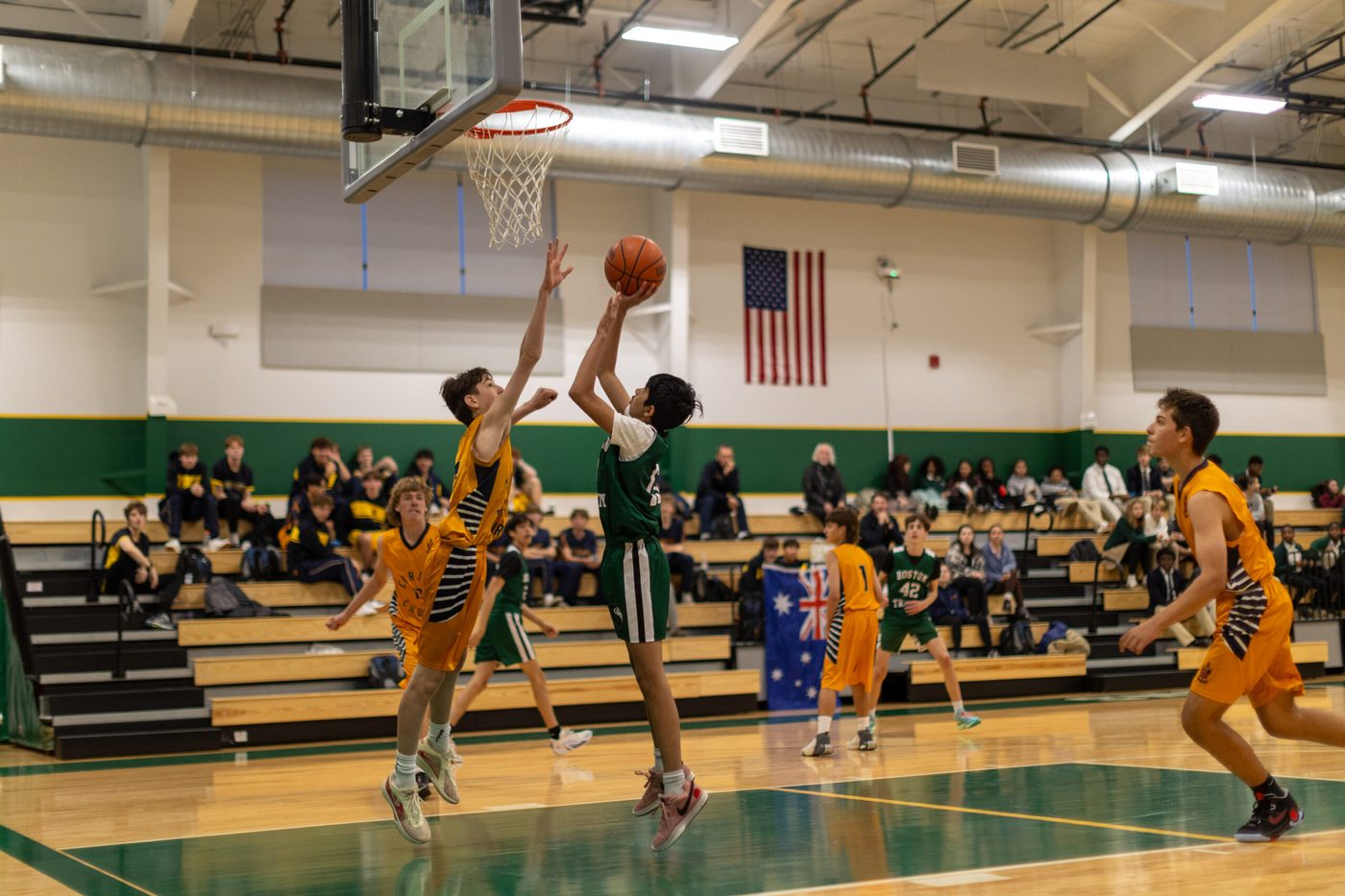
Boston Trinity Academy is a coeducational Christian day school for grades 6–12 in the Hyde Park neighborhood of Boston. The main entry grades are 6 and 9, and grades 7–8 and 10–12 are filled as space allows. Applicants to grades 6–8 submit an ISEE score, and applicants to grades 9–12 submit the SSAT, with the ISEE accepted in certain circumstances. Tuition for 2026–27 is $32,450 for domestic students. The deadline for fall 2027 entry has not been posted yet; the previous deadline was January 31.
| Entry grade | Test | Requirement | Notes |
|---|---|---|---|
| Grade 6 | ISEE | Required | Main entry grade. The school encourages families to start in the middle school rather than wait for grade 9. |
| Grades 7–8 | ISEE | Required | Admitted as space allows. Check availability in the grade of interest with the admission office before applying. |
| Grade 9 | SSAT (ISEE in certain circumstances) | Required | Main entry grade and the start of the upper school. Contact the admission office before choosing the ISEE in place of the SSAT. |
| Grades 10–12 | SSAT (ISEE in certain circumstances) | Required | Admitted as space allows. International applicants to the upper school apply to grades 9–11. |
Applicants to grades 6–8 should prepare for the ISEE. For grade 9 and above the school expects the SSAT, so a student who has already taken the ISEE, or who suits it better, should ask the admission office about substituting it before registering. Working back from the previous deadline of January 31, plan the main sitting for November or December.
The deadline, decision, and reply dates on the school's pages are still those of the previous cycle (fall 2026 entry): applications and new-family aid applications were due January 31, 2026, decisions and aid results were sent on March 10, enrollment replies and deposits were due April 10. The October 24 Open House has already passed. Admission for international students is rolling.
Coffee Morning places are limited, so register in Ravenna early; private tours can also be requested through the school's form. Until the new deadline is posted, plan around January 31: finish testing before December and submit the application, questionnaires, and recommendation requests by mid-January.
| Item | Submitted by | Due |
|---|---|---|
| Online application (Ravenna) | Parent | With the application (previous cycle: January 31) |
| Application fee | Parent | Submitted with the application |
| Student questionnaire | Student | With the application |
| Parent questionnaire | Parent | With the application |
| ISEE (grades 6–8) or SSAT (grades 9–12) score report | Parent | With the application |
| Transcript from the current school | School | With the application |
| Teacher recommendations (international applicants: one each from a math teacher, an English teacher, and an administrator who knows the student well) | Teacher | With the application |
| Interview (booked in Ravenna after the application is submitted) | Student / parent | After the application is submitted |
The application includes both a student questionnaire and a parent questionnaire, so prepare them separately: the student writes the first, and the parent explains why the family is choosing a Christian school in the second. The interview can only be booked after submission, so send the application early to leave time for it.
Families whose child attends a public school should check the Pathways conditions first and then choose between the tuition credit and a need-based aid application; the two cannot be combined. In the first year, budget for the new student fee, lunch, and bus service in addition to tuition.
Students who come without a parent must choose between a homestay and Austin House, which has few places and gives priority to upperclassmen, so ask about housing when applying. The school has no Chinese course, and students with limited English begin in ESL, so a TOEFL Junior or TOEFL score is a useful early check of English level.
Of the 54 schools in Massachusetts (Boston, its suburbs and the boarding schools) on this site, 44 require or accept the ISEE, 7 use another external test, 2 use only their own assessment or no test, and 1 does not state a test on its admissions page. Boston Trinity Academy is in the group “Requires or accepts the ISEE”. This groups schools by published testing policy only; it says nothing about which school is better.
What follows restates what the school publishes, without comment; the school’s current pages govern.
The school is a non-denominational Christian college preparatory school with a liberal arts curriculum. Grades 9 and 10 take a Humanities course that combines English, history, and Bible, all students in grades 7–8 study Latin, and every grade from 6 to 12 has a Bible course. Math is grouped by readiness rather than by grade. All upper school courses are taught at an honors level, with courses marked Honors asking more, and students take at least 3 AP courses before graduating, usually starting in grade 11. The school does not compute a GPA or rank students.
Every student has an advisor who meets with them regularly and is the main link between school and home. The school is divided into 4 Houses that compete for the House Cup through activity points over the year. Students in grades 11 and 12 serve in leadership roles such as Prefect. Students wear a uniform, personal devices are restricted during class, and lunch is served in the Dining Hall. Students come from Boston neighborhoods and more than 40 surrounding towns; 65% are students of color and 40% speak a language other than English at home (2024–25).
Athletics are required: middle school students take part in two seasons a year and upper school students in one. Teams play at varsity, junior varsity, and middle school levels. The Bradley Athletic Center opened in December 2022, and some games are played at outside venues.
Visual arts is required each year in grades 6–10, and grade 6 also takes music. The upper school offers Studio Art and AP Studio Art (Drawing, 2-D Design, and 3-D Design). Music includes an upper school choir without auditions, a Chamber Ensemble, a jazz band, and the student-run Madrigal Choir. There are fall and winter plays each year and a Senior Theatre Project in spring. Graduation requires 2 years of arts, and a major role or important backstage work can count toward arts credit.
The school was founded in 2002 and moved to its current five-acre campus in Hyde Park, Boston (17 Hale Street) in 2006. The main building holds classrooms, an auditorium, a dining hall, and worship space, and the attached Bradley Athletic Center serves as the gym. The Guerra Reading Room study space opened in 2024, and there is a Mac lab. The Hyde Park commuter rail station is about a 4-minute walk away, and MBTA buses 32 and 50 connect to the Orange Line at Forest Hills.
The school is a day school, with one small residence, Austin House, for international students. It is a 5-minute walk from campus, has limited places, and gives priority to upperclassmen. The 2023–24 residential brochure describes a full-time live-in faculty member, faculty-supervised study from Sunday to Thursday, and weekend activities such as shopping, skiing, college visits, church, and sports events.
The school is non-denominational Christian and welcomes students of any faith background; students and families do not sign a statement of faith. All students attend a weekly chapel service, take a Bible course in every grade from 6 to 12, and join the retreats held for each grade. Optional activities include a midweek Bible study, lunchtime prayer, and a monthly student-led worship night called Fire Night.
Two co-directors lead college counseling, and students can meet a college counselor from grade 9. Grades 11 and 12 follow a structured college program for all students, including a half-credit College Prep Resource course in grade 11 that covers SAT preparation, application guidance, and financial aid advising, using the Scoir platform.
Selected from destinations the school lists for the classes of 2020–2024 · the school’s document
| Item | As published | Class |
|---|---|---|
| AP scores of 4 or 5 | 65% of the graduating class source | 2024–25 |
Listed exactly as the school publishes them; not a comparison between schools and not an admission requirement.
Applicants to grades 6–8 submit the ISEE: Lower Level for grade 6 and Middle Level for grades 7–8. For grades 9–12 the school expects the SSAT and accepts the ISEE (Upper Level) in certain circumstances, so contact the admission office first. The score recipient code is 222754 for the ISEE and 1758 for the SSAT.
The deadline for fall 2027 entry has not been posted yet. In the previous cycle, applications and new-family aid applications were due January 31, 2026, decisions and aid results were sent together on March 10, and enrollment replies and deposits were due April 10. Admission for international students is rolling while space remains.
After submitting the application, families log in to Ravenna to book an interview, and international applicants can interview on campus or by Zoom. For visits, an Open House is held on November 17, 2026 (evening), and Coffee Mornings run on Wednesdays from December 2026 to January 2027. Register in Ravenna, or request a private tour or watch the virtual tour video.
Yes. The school issues the I-20, and about 10% of students are international. Applicants submit an English proficiency test, at least three years of transcripts, three recommendations, and a $250 application fee. Students may not live independently, so they live with a parent, with a homestay family arranged through the school, or at Austin House. International students are not eligible for aid.
Tuition for domestic students in 2026–27 is $32,450, plus a $500 new student fee. Aid is based on financial need only, and about 60% of families receive it. Students from public schools who have never attended a private elementary or middle school may qualify for the Pathways credit of $5,000 in the first year and $2,500 in the second.
Yes. The school welcomes students of any faith background and level of involvement, and neither students nor families sign a statement of faith. All students attend a weekly chapel service, take a Bible course in every grade from 6 to 12, and join the grade-level retreats, so families should be comfortable with that part of school life.
Data checked 2026-10-03. Where the school’s own pages disagree, this page follows the admissions page. This is not an official school page; confirm every requirement on the school’s admissions page for the current year.
An advisor works from this school’s stated requirements and deadlines to give a written plan: level, season and order of preparation.
Share the grade the student is applying to and an email address. An ISEE advisor replies within one business day with a written recommendation: which level to take, how to schedule the seasons and which section to work on first. The consultation is free and involves no admission promises.
You are looking at the application to ; the advisor will work from that school’s stated requirements.
Details such as target schools and test timing can be added after you submit, or discussed when the advisor contacts you.