Dallas–Fort Worth
Dallas–Fort Worth independent and parochial schools that accept the ISEE, from Dallas and Fort Worth to Plano: entry grades, levels and each school’s test policy.
Read →ISEE only, required for applicants to grades 5–11 (ISEE levels: Lower Level, Middle Level, Upper Level); applications close January 11, 2027 and testing must be complete by February 1, 2027.
Plan the application to The Episcopal School of Dallas →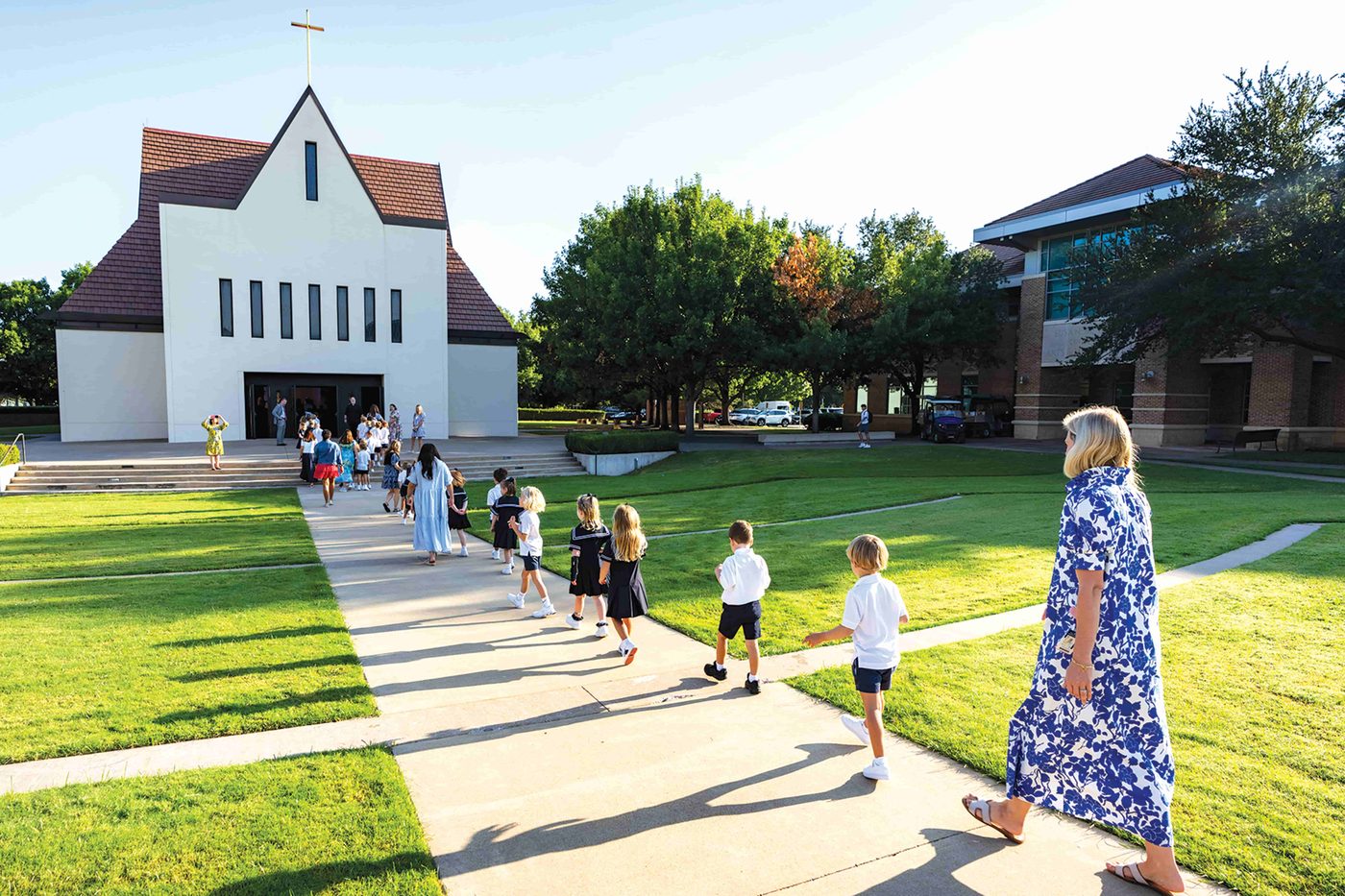
The Episcopal School of Dallas (ESD) is a coeducational Episcopal day school in Dallas for ages 3 through grade 12, with all divisions on one campus. Main entry points are Beginner, PreK, and kindergarten, plus grade 5 (about 18 new students a year) and grade 9 (about 30). Applicants to grades 5–11 submit an ISEE score, and applicants to PreK–grade 4 take CATS testing. For fall 2027 entry, Part 1 of the application for grades 5–12 is due January 11, 2027, and Part 2 and the ISEE are due February 1, 2027; tuition for 2023–24 ranged from $27,485 to $37,850.
| Entry grade | Test | Requirement | Notes |
|---|---|---|---|
| Beginner (age 3) | No written test | Not required | Applicants attend a Student Group Observation on campus, booked in the Admission Portal; slots fill quickly. |
| PreK–grade 4 | CATS (Collaborative Academic Testing Services) | Required | Families register at catstexas.com. PreK and K also attend a Student Group Observation, and grades 1–4 add a Student Visit. |
| Grade 5 | ISEE | Required | Main entry point, with about 18 new students a year on average. |
| Grade 9 | ISEE | Required | Main entry point, with about 30 new students a year on average. |
| Grades 6–8 and 10–11 | ISEE | Required | Same application process as the main entry grades; space is limited. |
| Grade 12 | Not applicable | Not part of the process | The application process the school lists covers Beginner through grade 11. |
For fall 2027 entry the ISEE must be taken by February 1, 2027. Plan the main sitting for November or December and keep January as a backup. Before registering, ask the admission office whether at-home ISEE scores are accepted and how several sittings are read.
Testing must be complete by February 1, 2027 (the application itself is due January 11, 2027). A student may test once per season and up to three times in a school year; online results usually arrive in 3–5 days and paper results in 5–10 days. What follows is an ISEEPrep teaching recommendation, not a rule of the school or of E3n; actual dates are those shown in the registration account.
Dates are for fall 2027 entry, from the school's division application pages; the full checklist for each division is in the Admission Portal.
Submit Part 1 by January 11 (Lower School: December 11), take the first ISEE by the end of December, and keep January for a second sitting so that Part 2 and the scores are complete by February 1.
| Item | Submitted by | Due |
|---|---|---|
| Online application and application fee (Veracross Admission Portal) | Parent | Part 1: January 11, 2027 (grades 5–12) or December 11, 2026 (Lower School) |
| Student Profile: household information and a short-answer Parent Statement; grades 5–11 also submit a Student Statement | Parent / student | Same day as the application deadline |
| Teacher evaluations: the current math teacher and the current English teacher for grades 5–11, or one current teacher for Beginner–grade 4. Families enter each teacher's work email in the portal, and the system sends a confidential form. | Teacher | Same day as the application deadline (the forms opened November 1 in the last round) |
| School records through the Records Release form: first-semester report card for the current year plus grades from the previous two years | School | February 3 in the last round; families should not hand the form to the registrar before December 1 |
| ISEE scores (grades 5–11) or CATS testing (PreK–grade 4) | Student | February 3 in the last round |
| Campus visit: Student Group Observation for Beginner–K, or Student Visit for grades 1–11 (grades 5–8 interview the same day) | Student | Last round: December 15 for Beginner–K; February 3 for grades 1–11 |
| Financial aid application (if needed): Parents' Financial Statement (PFS) through SSS, with tax documents | Parent | February 15 in the last round |
The Student Visit is scheduled only after the application fee is paid, and grades 5–8 interview that day, so submit the form and fee soon after the portal opens. Teacher evaluations can be sent only once the forms open, so speak with the current math and English teachers ahead of time.
These are 2023–24 amounts, so confirm the 2027–28 figures with the school. Tuition rises by about $7,000 from grade 4 to grade 5, so families planning a grade 5 or grade 9 entry should budget at the higher level. Families who need aid should gather tax documents while preparing the application.
ESD is a day school, so it suits families already living in Dallas or planning to move there. Students with Chinese background can begin Chinese in grade 7 and count it toward the high school language requirement. Families applying from abroad should ask the admission office about international status, visas, and English requirements before applying.
Of the 24 schools in Dallas–Fort Worth on this site, 21 require or accept the ISEE, 1 uses another external test, 0 use only their own assessment or no test, and 2 do not state a test on their admissions pages. The Episcopal School of Dallas is in the group “Requires or accepts the ISEE”. This groups schools by published testing policy only; it says nothing about which school is better.
What follows restates what the school publishes, without comment; the school’s current pages govern.
The upper school is a four-year college-preparatory program with 32 AP courses, including the AP Capstone Diploma (AP Seminar and AP Research); some AP courses run only with enough enrollment. Honors courses add 0.5 to the GPA scale and AP courses add 1.0. From grade 7, the school invites students into honors math based on grades, testing, work habits, and math teacher recommendation, and students can complete Algebra I in middle school.
In the middle school, each advisory has 8–10 students (9 on average) and one advisor, who is the family's first point of contact. Advisories attend Chapel together each day and eat lunch at round tables. The upper school has more than 35 clubs and activities, and a student-elected Honor Council handles violations of the Code of Conduct. Middle school grades take class trips: grade 5 goes to Wolf Run for an overnight and to Galveston, grade 6 to Washington, grade 7 to Camp Champions in the Texas Hill Country, and grade 8 to Colorado.
Grades 7–12 offer 19 sports and more than 60 teams in the Southwest Preparatory Conference (SPC). High school graduation requires 6 activity credits and a half-credit health course, which students can earn through varsity teams or through Lifetime Fitness, Mountain Biking, and Personal Fitness. In grades 7–8, interscholastic sports serve as physical education, and grades 5–6 have physical education every day.
The upper school offers 38 arts courses, and the middle and upper schools together offer more than 60. High school graduation requires 1 arts credit. Grade 9 students can choose introductory courses such as Acting, Band, Ceramics, Choir, Debate, Film Production, Photography, Strings, and Technical Theatre, and upper grades add AP art courses and AP Music Theory. Students have more than 50 performances, exhibitions, and competitions each year.
The main campus covers 42 acres at 4100 Merrell Road in Dallas. The lower school moved in during August 2019, so all divisions now share one campus. The school also has the 84-acre Wolf Run Outdoor Education Center in Anna, Texas, which serves as the base for outdoor education.
The school follows Episcopal tradition. The whole school gathers for Chapel each day, following the Book of Common Prayer, with Holy Eucharist once a week, and daily Chapel attendance is a graduation requirement. The school states that families of all faith backgrounds are welcome.
Three full-time college counselors work with students and parents beginning in grade 9. In the class of 2023, students applied to an average of 7.5 colleges each.
Selected from the alphabetical list of destinations in the school's 2023–24 viewbook for the classes of 2020–2023 · the school’s document
| Item | As published | Class |
|---|---|---|
| College admission | 104 students received 440 offers from 147 colleges, with more than $10.8 million in merit scholarships source | Class of 2023 |
| ACT distribution (85 students) | 31–36: 35 students; 26–30: 30; 21–25: 19; 16–20: 1 source | 2023 |
| SAT distribution (35 students) | Reading and writing: 700–800, 13 students; 600–699, 18; 500–599, 4. Math: 700–800, 10 students; 600–699, 16; 500–599, 7; 400–499, 2. source | Class of 2023 |
| AP exams | 256 students took 725 exams; 84% of students scored 3 or higher on at least one exam source | 2022 |
| National Merit | 5 Commended Students source | 2023 |
Listed exactly as the school publishes them; not a comparison between schools and not an admission requirement.
Applicants to grades 5–11 submit an ISEE score. Applicants to PreK–grade 4 take CATS testing, which families book at catstexas.com. Beginner applicants take no written test and attend a Student Group Observation instead. Register for the ISEE at admission.org (E3n) and list ESD as a score recipient with code 447503.
Under the general ISEE rules, applicants to grades 5–6 take the Lower Level, grades 7–8 the Middle Level, and grades 9–11 the Upper Level. For ESD's two main entry points, grade 5 corresponds to the Lower Level and grade 9 to the Upper Level. The ISEE must be taken by February 1, 2027, so leave time for a second sitting.
For fall 2027 entry, Part 1 of the application is due December 11, 2026 for the Lower School and January 11, 2027 for grades 5–12. Part 2, including the ISEE for grades 5–11, is due February 1, 2027, and admission decisions are released March 12, 2027. Each division's checklist is in the Admission Portal.
After the application fee is paid, the admission office offers two dates for the Student Visit. Applicants to grades 5–8 interview on the day of the visit, and applicants to grades 9–11 attend a Student Visit and complete a form beforehand. Beginner–K applicants attend a Student Group Observation; slots fill quickly, so book early.
Tuition for 2023–24 ranged from $27,485 for Beginner to $37,850 for grade 12, with grades 5–12 between $37,440 and $37,850, plus other fees. Aid is awarded on financial need only through SSS. In 2023–24, 19% of students received aid, the average award was $20,800, and it covered 58% of tuition.
Yes. In grades 7–8 students choose among Arabic, Chinese, French, Latin, and Spanish, and two years count for one high school language credit. The upper school offers Mandarin Chinese depending on enrollment, and AP Chinese Language and Culture runs when demand is sufficient. Graduation requires three consecutive credits of one language.
Data checked 2026-11-18. Where the school’s own pages disagree, this page follows the admissions page. This is not an official school page; confirm every requirement on the school’s admissions page for the current year.
An advisor works from this school’s stated requirements and deadlines to give a written plan: level, season and order of preparation.
Share the grade the student is applying to and an email address. An ISEE advisor replies within one business day with a written recommendation: which level to take, how to schedule the seasons and which section to work on first. The consultation is free and involves no admission promises.
You are looking at the application to ; the advisor will work from that school’s stated requirements.
Details such as target schools and test timing can be added after you submit, or discussed when the advisor contacts you.