Massachusetts
Massachusetts independent and boarding schools that accept the ISEE, from Boston and its suburbs to the boarding belt: entry grades, levels and each school’s test policy.
Read →ISEE, SSAT or another accepted test, required for applicants to grades 5–12 (ISEE levels: Lower Level, Middle Level, Upper Level); applications close January 15, 2027.
Plan the application to Dana Hall School →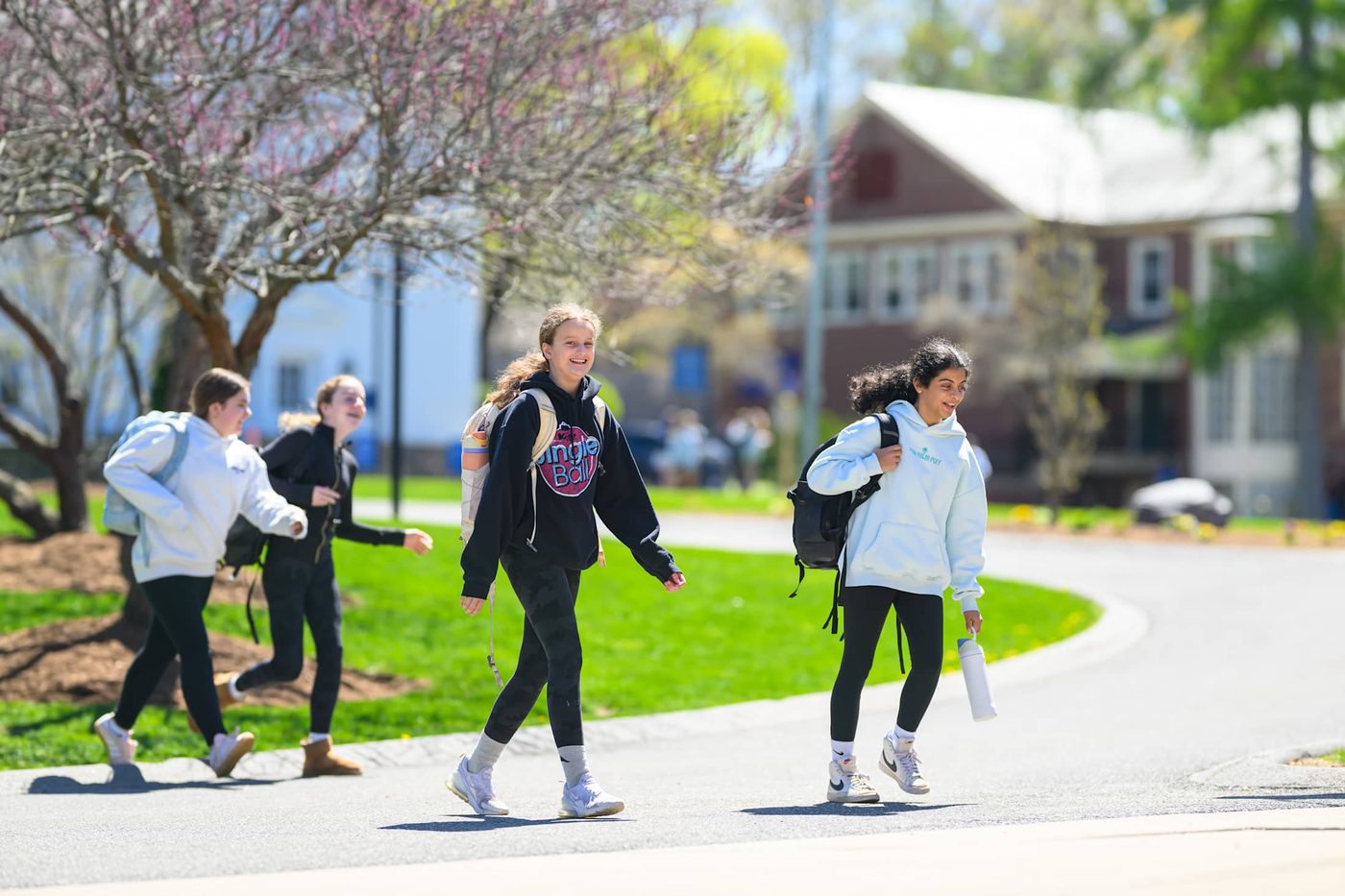
Dana Hall School is a girls' school for grades 5–12 in Wellesley, Massachusetts, with both day and boarding students; boarding begins in grade 9. Every applicant submits standardized math and literacy scores from the ISEE, the SSAT, or another assessment from the current school, taken within the past calendar year. Application materials and test scores are due January 15, 2027, an interview is required, and decisions are released on March 10. Tuition for 2026–27 is $65,765 for day students and $79,925 for boarding students.
| Entry grade | Test | Requirement | Notes |
|---|---|---|---|
| Grades 5–12 | ISEE, SSAT, or another standardized assessment from the current school | Required (any one) | Scores must include math and literacy and come from a test taken within the past calendar year. Other assessments include state tests, ERB (now E3n) assessments, and MAP Growth. |
The ISEE is not the only option. A student at a U.S. school who already has recent MAP Growth or state test scores can ask the admission office whether those can be used directly. Applicants who choose the ISEE should test before December so the report reaches the school by January 15. The interview also includes a 15-minute writing exercise, so practice short timed pieces.
The application deadline is January 15, 2027. A student may test once per season and up to three times in a school year; online results usually arrive in 3–5 days and paper results in 5–10 days. What follows is an ISEEPrep teaching recommendation, not a rule of the school or of E3n; actual dates are those shown in the registration account.
These are fall 2027 entry dates. Campus visits and interviews opened on October 1, 2026 and continue through January 31, 2027; the October 24 open house has passed. After April 10, the school reviews late applications on a rolling basis as space allows.
The interview period runs to January 31, but application materials are due January 15, so schedule the interview before December and leave time for the parent and student questionnaires. Recommendations are also due January 15, so ask the current English teacher, math teacher, and school administrator in November.
| Item | Submitted by | Due |
|---|---|---|
| Student Profile (basic student information; the application fee is paid at submission) | Parent | January 15, 2027 |
| Parent Perspective (parent questionnaire) | Parent | January 15, 2027 |
| Student Perspective (student questionnaire) | Student | January 15, 2027 |
| Recommendations: one each from the current English teacher and math teacher | Teacher | January 15, 2027 |
| School administrator or counselor report | School | January 15, 2027 |
| Transcripts: 2025–26 grades and current 2026–27 grades | School | January 15, 2027 |
| Standardized math and literacy scores (ISEE, SSAT, or another school assessment), sent by the testing service or the current school | Parent | January 15, 2027 |
| TOEFL, Duolingo, or IELTS score (applicants whose first language is not English) | Parent | January 15, 2027 |
| Interview (on campus or by Zoom) | Student | By January 31, 2027 |
| Financial aid application, if needed (through Clarity) | Parent | January 15, 2027 |
| Optional: personal or special interest recommendation | Teacher | January 15, 2027 |
All materials are handled in Ravenna, and interviews can be booked only after the application is started, so create the account and submit the Student Profile before November, then choose an interview time. The recommendation form is shared with other Boston-area schools that use Ravenna, which reduces repeat work for teachers when a family applies to several schools.
In the first year, budget for the activity deposit and $500–$1,500 in yearly extras beyond tuition, and for school insurance if the student is international. Families with annual income of $150,000 or less should consider applying for aid, which must be filed through Clarity by January 15 together with the admission application.
Applicants from abroad can apply only to boarding in grades 9–12; for grades 5–8, immediate family must live locally. The English tests have no minimum score, but the school has no ESL program, so a student needs to follow full English classes and the writing load on arrival. Schedule the TOEFL or Duolingo and ISEE preparation at different times.
Of the 54 schools in Massachusetts (Boston, its suburbs and the boarding schools) on this site, 44 require or accept the ISEE, 7 use another external test, 2 use only their own assessment or no test, and 1 does not state a test on its admissions page. Dana Hall School is in the group “Requires or accepts the ISEE”. This groups schools by published testing policy only; it says nothing about which school is better.
What follows restates what the school publishes, without comment; the school’s current pages govern.
The curriculum is mostly school-designed college preparatory courses, with AP and Honors courses added. There is no cap on the number of AP courses, most students begin AP in grade 11, and students who enroll in an AP course sit the AP exam (grade 12 students may opt out). Math runs from Algebra I to Calculus on several tracks (standard, Accelerated, Honors, and AP), and the math department places students together with the student and advisor. The transcript does not report class rank or GPA.
The school year has three trimesters. The standard upper school load is five main courses, one minor course, and one co-curricular each trimester, plus Forum, a small-group course over four years that covers wellness, personal finance, and college preparation. Each student has an advisor who is the family's main contact. There are about 40 student clubs, and the dining hall serves three meals a day to day and boarding students.
Varsity teams are not required, but students in grades 9–11 complete a co-curricular each trimester and grade 12 students two trimesters; the choices are an interscholastic team, a noncompetitive fitness class, a performing arts activity, or a community service program. Middle school students also have a co-curricular each trimester. The school fields 35 teams in 14 interscholastic sports.
Visual arts in the upper school include architecture, art history, ceramics, design, drawing, painting, and photography, plus AP Art History and AP Studio Art; the middle school offers drawing, painting, ceramics, and printmaking. Performing arts include choir and strings in every grade, flute ensemble, theater, and dance. The upper school stages a fall play, a musical, and a student-directed play each year, plus a spring dance concert, and the middle school has its own productions.
The 55-acre campus is in a residential part of Wellesley at 45 Dana Road, 12 miles from Boston. The town center and the Wellesley Square commuter rail station are a five-minute walk away, and the train reaches Boston in about 30 minutes. The ice hockey team practices at the Boston Sports Institute, a 7-minute drive from campus.
Boarding begins in grade 9. There are 105 boarding students in five residences of 14–32 students each. Each residence has a house director, a house assistant, and student proctors, and resident faculty supervise study hours. New grade 9 students can live in two of the residences in the Johnston group alongside upper-grade students who chose to live with new students, and first-year boarders are matched with roommates by interests and habits. Student Affairs organizes weekend activities, including day trips to Boston, around New England, and to New York, with the school providing transportation and supervision.
Three college counselors work with students. Each student is assigned a counselor in grade 10, the weekly Forum course in grade 11 explains the application process, and one-on-one meetings continue through grade 12. More than 100 college admission representatives visit each year.
Selected, in alphabetical order, from destinations the school lists for the class of 2026 · the school’s document
Not necessarily. Every applicant submits standardized math and literacy scores, and the ISEE, the SSAT, or another assessment from the current school (such as a state test, an ERB (now E3n) assessment, or MAP Growth) is acceptable if taken within the past calendar year. The ISEE code is 222275 and the SSAT code is 2728, and scores must arrive by January 15, 2027. The school says test scores are not the deciding factor.
Under ISEE rules, applicants to grades 5–6 take the Lower Level, grades 7–8 the Middle Level, and grades 9–12 the Upper Level. Dana Hall admits students in grades 5–12, so families register for the level that matches the grade the student is applying to. When registering on admission.org, which is run by E3n, add the school as a score recipient using code 222275.
The application, recommendations, transcripts, test scores, and aid application are all due January 15, 2027, and the interview must be completed by January 31. Decisions are released in Ravenna on March 10, and admitted families reply by April 10. Late applications are reviewed on a rolling basis after April 10 as space allows. The school does not accept mid-year entry.
The interview is required. After starting the application in Ravenna, families book through the Calendly link there, and interviews run from October 1, 2026 to January 31, 2027. An on-campus interview with a tour takes about 2 hours. A Zoom interview takes about 75 minutes, with parents joining after about 45 minutes. Students complete a writing exercise of about 15 minutes on the interview day.
Yes. The school admits international students, boarding begins in grade 9, and I-20 forms are issued only for boarding students in grades 9–12. Applicants to grades 5–8 must live locally with immediate family. Applicants whose first language is not English submit a TOEFL, Duolingo, or IELTS score with no minimum, and there is no ESL program. Boarders must name an emergency guardian who can take charge within 24 hours.
Tuition for 2026–27 is $65,765 for day students and $79,925 for boarding students, plus a $1,000 or $1,200 activity deposit. Aid is based on financial need only, and about 25% of students receive it. Admitted students from families with annual income of $150,000 or less and typical assets receive full tuition assistance. Aid for international students is limited, with priority for U.S. citizens. The aid application is due January 15.
Data checked 2026-10-03. Where the school’s own pages disagree, this page follows the admissions page. This is not an official school page; confirm every requirement on the school’s admissions page for the current year.
An advisor works from this school’s stated requirements and deadlines to give a written plan: level, season and order of preparation.
Share the grade the student is applying to and an email address. An ISEE advisor replies within one business day with a written recommendation: which level to take, how to schedule the seasons and which section to work on first. The consultation is free and involves no admission promises.
You are looking at the application to ; the advisor will work from that school’s stated requirements.
Details such as target schools and test timing can be added after you submit, or discussed when the advisor contacts you.